Imagine slicing into a perfectly cooked roast, every bite tender, juicy, and bursting with flavor. The secret isn’t just a great recipe or a skilled hand; it’s precision. For home cooks and culinary enthusiasts alike, an oven meat thermometer is the unsung hero, transforming guesswork into guaranteed perfection. This indispensable tool is your personal assurance that every dish from your “PerfectCook” kitchen is not only delicious but also safely prepared. Let’s dive deep into how this simple gadget can elevate your cooking to professional standards, ensuring delightful results every time you open your oven door.
The Unsung Hero of the Kitchen: Why Oven Meat Thermometers Matter
For generations, cooks relied on visual cues, touch tests, or even cutting into meat to gauge doneness. While traditional methods have their place, they often lead to overcooked, dry results or, worse, undercooked meat that poses food safety risks. An oven meat thermometer eliminates this uncertainty by providing real-time, accurate internal temperature readings. It’s the ultimate tool for achieving that ideal steak, a succulent roast chicken, or a Thanksgiving turkey that’s moist from edge to center. This precision ensures you hit the “sweet spot” of doneness, guaranteeing both culinary excellence and peace of mind.
Beyond Guesswork: The Evolution of Precision Cooking
The journey of meat thermometers has come a long way. From simple dial thermometers to advanced wireless probes, the core purpose remains the same: to deliver perfectly cooked meat. Modern oven meat thermometers integrate seamlessly into your cooking process, allowing you to monitor temperatures without constantly opening the oven door, a habit that can drastically affect cooking times and overall doneness. They empower you to take control, understanding the precise moment your meat reaches its peak, rather than hoping for the best.
The Science of Doneness: Ensuring Safety and Flavor
Cooking meat to the correct internal temperature isn’t just about taste; it’s a critical safety measure. Harmful bacteria can thrive in undercooked meats, leading to foodborne illnesses. The USDA provides clear guidelines for safe minimum internal temperatures for various proteins, and an oven meat thermometer is the most reliable way to meet these standards. By accurately tracking the temperature, you ensure pathogens are destroyed, while also preserving the meat’s natural juices and flavor, preventing it from drying out.
Types of Oven Meat Thermometers: Finding Your Perfect Match
The world of oven meat thermometers offers a variety of options, each designed to fit different cooking styles and needs. Understanding these types will help you choose the ideal “PerfectCook” companion for your kitchen.
Traditional Dial Thermometers: Simple and Reliable
These are perhaps the most recognizable type of oven meat thermometer. Featuring an analog dial display, they are typically oven-safe and designed to be left in the meat throughout the cooking process.
- Features: Easy-to-read large dials, often with temperature zones marked for different meats. No batteries required.
- Pros: Inexpensive, durable, and straightforward to use. You can easily see the temperature progression.
- Cons: Can be slower to register changes compared to digital models. Requires opening the oven door to read, which can cause temperature fluctuations.
Wired Digital Probe Thermometers: The Modern Workhorse
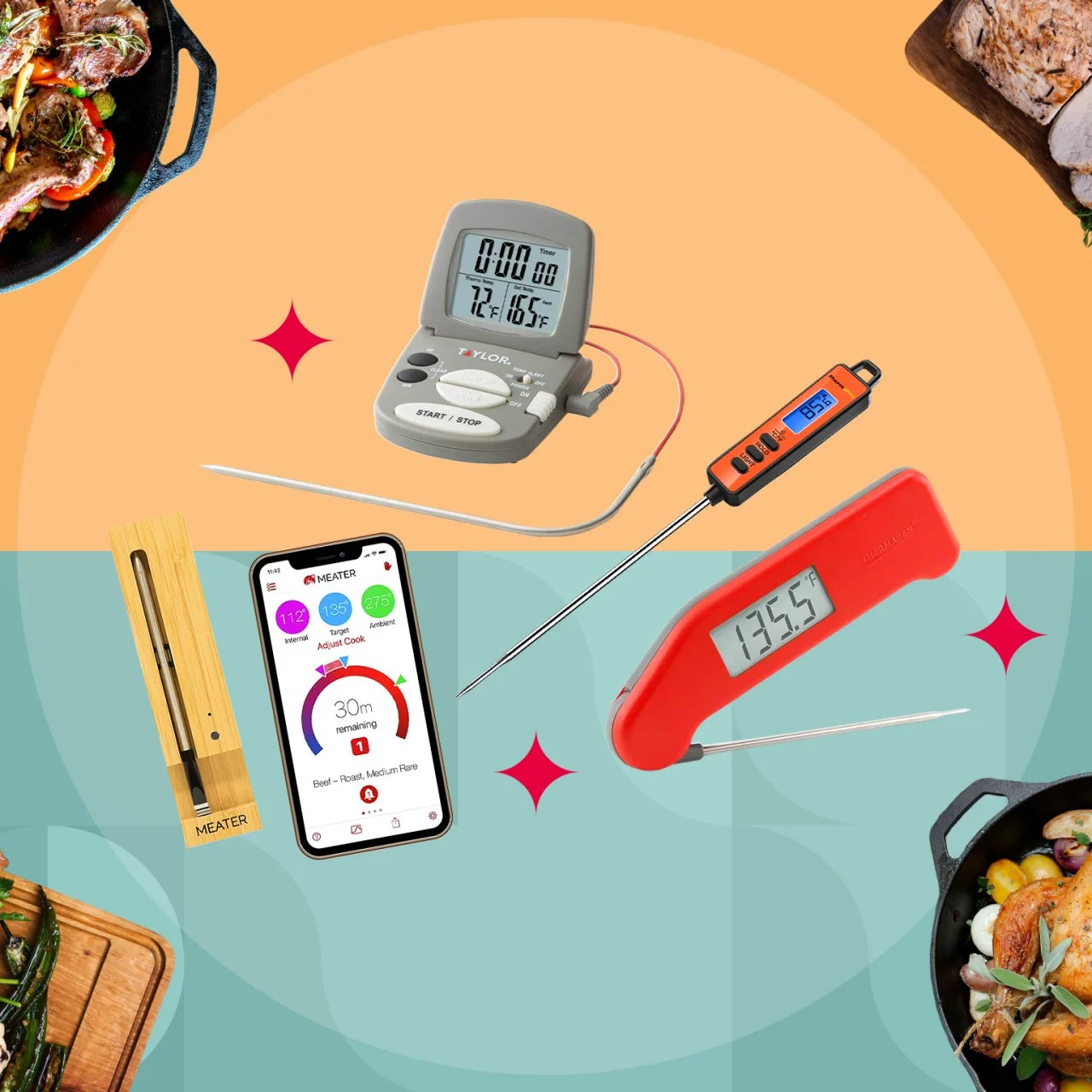
For many home cooks, wired digital probe thermometers offer the best balance of accuracy, convenience, and features. They consist of a metal probe connected by a heat-resistant wire to a digital display unit that stays outside the oven.
- Features: Digital display, often backlit for easy reading, programmable high/low alarms, timers, and preset temperature settings for various meats.
- Pros: Allows continuous monitoring without opening the oven. Alarms alert you when your target temperature is reached, preventing overcooking. Highly accurate and fast readings.
- Cons: The wire can sometimes be cumbersome, and care must be taken to ensure it doesn’t get pinched or cut by the oven door.
Wireless/Bluetooth Smart Thermometers: The Future is Connected
Stepping up in technology, wireless smart thermometers offer the ultimate in convenience and hands-off monitoring. These probes connect via Bluetooth or Wi-Fi to a smartphone app, providing real-time updates and advanced features.
- Features: Completely wire-free probes (some with dual sensors for both internal meat and ambient oven temperature), guided cook systems, predictive cook times, and extensive range.
- Pros: Freedom to move around your home while monitoring your cook. Detailed data, alerts, and cooking history in an intuitive app. Ideal for long cooks like smoking or slow roasting.
- Cons: Generally more expensive. Relies on app connectivity, and battery life needs to be managed.
“Choosing the right oven meat thermometer isn’t about having the fanciest gadget, but finding the one that seamlessly integrates into your cooking routine, giving you confidence and consistent results,” says Chef Eleanor Vance, a culinary expert and proponent of precise cooking.
Your Guide to Flawless Roasting: How to Use an Oven Meat Thermometer
Using an oven meat thermometer effectively is simpler than you might think, and it’s the key to unlocking perfectly cooked dishes.
Placement is Key: Where to Insert for Accuracy
The most critical step in using any oven meat thermometer is proper placement. For an accurate reading, the probe must be inserted into the thickest part of the meat.
- Avoid Bone: Bones conduct heat differently than meat, leading to inaccurate readings.
- Avoid Fat and Grislte: These areas don’t represent the true internal temperature of the muscle.
- Avoid the Pan: Ensure the probe tip isn’t touching the cooking pan, which can also give a false high reading.
For thinner cuts like pork chops or chicken breasts, insert the probe horizontally from the side to reach the center of the thickest part. For larger roasts or whole poultry, aim for the densest muscle.
Setting Up for Success: Pre-Cooking Steps
For oven-safe, leave-in probe thermometers, insert the probe before you begin cooking. This ensures stability and allows you to monitor the temperature from the very start.
- Calibrating Your Thermometer: Just like any precision instrument, an oven meat thermometer can lose accuracy over time. A simple ice bath test can help you recalibrate it. Fill a glass with crushed ice and water, let it sit for a minute, then insert your thermometer. It should read 32°F (0°C). If it doesn’t, follow your thermometer’s instructions for calibration. This simple step ensures your readings are always reliable.
Monitoring and Alarms: Hands-Off Perfection
One of the greatest advantages of a digital or wireless oven meat thermometer is the ability to monitor progress without constant intervention.
- Understanding Temperature Progression: Observe how the internal temperature slowly rises. This gradual increase helps cook the meat evenly.
- The Power of Programmable Alerts: Set your desired final temperature, and the alarm will sound when it’s reached. This feature is a game-changer, allowing you to tend to other tasks without worrying about overcooking.
The Crucial Rest: Why Carryover Cooking Matters
Once your meat reaches its target temperature, resist the urge to slice into it immediately. This is where “carryover cooking” comes into play. As meat rests outside the oven, its internal temperature will continue to rise by several degrees (typically 5-10°F) due to residual heat. Resting also allows the juices to redistribute throughout the meat, resulting in a more tender and succulent product. Always factor this into your target temperature, removing the meat slightly before it reaches its final desired doneness.
Troubleshooting and Care: Keeping Your Thermometer in Top Shape
Even the most reliable oven meat thermometer can encounter issues. Knowing how to troubleshoot and maintain it will ensure its longevity and accuracy.
Common Mistakes to Avoid:
- Shallow Insertion: Not inserting the probe deep enough into the thickest part of the meat can result in a falsely low reading, leading to undercooked food.
- Bone Contact: As mentioned, bone heats faster than meat, giving you an artificially high temperature.
- Skipping Calibration: An uncalibrated thermometer can be wildly inaccurate, defeating its purpose. Make it a routine to check calibration.
- Opening the Oven Too Often: For non-remote thermometers, frequent oven door opening can cause significant temperature drops, prolonging cooking time and affecting evenness.
- Not Resting the Meat: Ignoring the resting period means you miss out on peak juiciness and might cut into meat before carryover cooking is complete.
Cleaning and Maintenance: Extending Lifespan
Most thermometer probes are stainless steel and can be wiped clean with a damp cloth or sponge. For wired probes, ensure the connection to the display unit doesn’t get wet. Wireless probes are often dishwasher-safe – always check your specific model’s instructions. Proper cleaning prevents cross-contamination and prolongs the life of your essential kitchen tool.
When to Calibrate: Ensuring Ongoing Accuracy
Calibrate your oven meat thermometer regularly, especially if you notice inconsistent readings, after dropping it, or if it has been stored for a long time. A quick ice bath test can confirm its accuracy in seconds.
Beyond the Basics: Advanced Tips for PerfectCook Enthusiasts
Elevate your “PerfectCook” game with these expert insights.
Temperature Targets for Every Cut:
Knowing the safe and desired internal temperatures is paramount:
- Beef, Lamb, Veal (Roasts, Steaks, Chops):
- Rare: 125-130°F (52-54°C)
- Medium-Rare: 130-135°F (54-57°C)
- Medium: 135-140°F (57-60°C)
- Medium-Well: 140-145°F (60-63°C)
- Well-Done: 150-160°F (66-71°C) (Note: USDA safe minimum for whole cuts is 145°F with a 3-minute rest)
- Ground Meats (Beef, Pork, Lamb, Veal): 160°F (71°C)
- Poultry (Chicken, Turkey, Duck): 165°F (74°C)
- Pork (Roasts, Chops): 145°F (63°C) with a 3-minute rest.
- Fish: 145°F (63°C)
Always remember to factor in carryover cooking when setting your removal temperature.
Understanding Ambient vs. Internal Temperature
Some advanced wireless oven meat thermometers feature dual sensors: one for the internal meat temperature and another for the ambient temperature inside your oven or grill. This allows for even greater control, helping you monitor if your oven itself is maintaining the correct temperature, which can vary from its dial setting.
Maximizing Juiciness: The Role of the Thermometer
The beauty of an oven meat thermometer is that it allows you to cook to precise doneness without ever pushing past it. This means less shrinkage, less moisture loss, and ultimately, a more succulent, flavorful result. Removing meat exactly when it hits its target (accounting for carryover) ensures that every fiber retains maximum juiciness.
Choosing Your PerfectCook Oven Meat Thermometer
When selecting an oven meat thermometer for your kitchen, consider these factors:
- Accuracy: This is paramount. Look for models with a high reputation for precision.
- Temperature Range: Ensure it covers the temperatures you’ll be cooking (from low and slow to high roasts).
- Ease of Use: An intuitive interface and clear display are essential.
- Features: Do you need alarms, timers, presets, or wireless connectivity?
- Durability: Look for quality materials, especially in the probe and wire, to withstand high oven temperatures.
- Budget: There are excellent options across all price points, so find one that meets your needs without breaking the bank.
Conclusion
The oven meat thermometer is more than just a gadget; it’s a game-changer for anyone serious about cooking. It demystifies the art of roasting, providing the scientific certainty needed to ensure food safety, prevent overcooking, and consistently achieve tender, juicy, and flavorful results. Embrace this essential tool in your “PerfectCook” kitchen, and transform every meal into a culinary triumph. Say goodbye to dry, uninspired dishes and hello to the unwavering confidence that comes with precise temperature control. Your taste buds, and your guests, will thank you.
FAQ
1. Can all meat thermometers stay in the oven?
No, not all meat thermometers are designed to stay in the oven during the entire cooking process. Only “oven-safe” or “leave-in” probe thermometers are suitable for continuous monitoring in high heat. Instant-read thermometers are meant for quick spot checks and should be removed after each reading.
2. How deep should I insert an oven meat thermometer?
You should insert the probe at least 2-2.5 inches deep into the thickest part of the meat, ensuring the tip reaches the very center. It’s crucial to avoid touching any bones, large pockets of fat, or the cooking pan, as these can lead to inaccurate readings.
3. Why is my oven meat thermometer reading inaccurate?
Inaccuracies can stem from several factors, including improper probe placement (touching bone/fat/pan), failure to calibrate the thermometer regularly, or a faulty unit. Environmental factors like opening the oven door too frequently can also impact overall cooking accuracy.
4. Do I need to calibrate my oven meat thermometer?
Yes, regular calibration is highly recommended to ensure your oven meat thermometer provides accurate readings. A simple ice bath test (the thermometer should read 32°F or 0°C) is a quick way to check its accuracy and recalibrate if necessary, following the manufacturer’s instructions.
5. What’s the difference between an instant-read and an oven-safe thermometer?
An instant-read thermometer provides a rapid temperature reading (in a few seconds) but is not designed to stay in the oven. An oven-safe or leave-in thermometer is specifically built to withstand prolonged exposure to oven heat, allowing for continuous monitoring of meat as it cooks.
6. How does carryover cooking affect meat temperature?
Carryover cooking refers to the phenomenon where meat continues to cook and its internal temperature rises even after it’s removed from the oven. This is due to residual heat. You should remove meat from the oven a few degrees below its target temperature to account for this rise and ensure perfect doneness.
|
Our Picks for the Best Meat Thermometer in 2026
As an Amazon Associate I earn from qualifying purchases.
|
||
| Num | Product | Action |
|---|---|---|
| 1 | Meat Thermometer Digital, Instant Read Meat ThermometerI for Grill and Cooking, Waterproof Food Thermometer for Kitchen and Outside, BBQ, Turkey, Candy, Liquids, Beef |

|
| 2 | ThermoPro TP19H Digital Meat Thermometer for Cooking with Ambidextrous Backlit and Motion Sensing Kitchen Cooking Food Thermometer for BBQ Grill Smoker Oil Fry Candy Instant Read Thermometer |
|
| 3 | ChefsTemp ProTemp 2nd-Gen Needle Probe Wireless Meat Thermometer Unlimited Range Bluetooth & WiFi,Compatible with ProTemp S1 & ProTemp 2 Plus (One Probe) |
|
| 4 | EIHO Wireless Bluetooth Meat Thermometer with 2 Ultra-Thin Probes, Smart Digital Food Thermometer 600FT Remote Range, Standalone Smart Base for Grill Smoker Roast Oven, Cooking Gifts |
|
| 5 | 0.5 Sec Instant Read Meat Thermometer Digital with ±0.5℉ Precision, Food Thermometer for Cooking Kitchen Gadgets, Oven Grill Candy BBQ Essentials Accessories, Gifts for Him Dad Men Birthday, Red |
|
| 6 | Rubbermaid Commercial Products Food/Meat Instant Read Thermometer, Pocket Size, Dishwasher Safe, Red, For Meat/Food Cooking and Grilling/Oven |
|
| 7 | Meat Thermometer Digital - 0.5s Instant-Read Thermometer with Auto-Rotating Backlit Display, IP67 Waterproof and Calibration for Cooking, Grilling, BBQ, Candy, Liquid, Beef - Gifts for Men/Chefs |
|
| 8 | Escali AH1 Stainless Steel Oven Safe Meat Thermometer, Extra Large 2.5-inches Dial, Temperature Labeled for Beef, Poultry, Pork, and Veal Silver NSF Certified |
|
| 9 | ThermoPro TP16 Large LCD Digital Cooking Food Meat Thermometer for Smoker Oven Kitchen BBQ Grill Thermometer Clock Timer with Stainless Steel Temperature Probe |
|
| 10 | Alpha Grillers Meat Thermometer Digital - Instant Read Food Thermometer for Cooking and Grilling Gifts for Men Valentines Day Gifts for Him Her Mom Dad |
|