Imagine orchestrating a symphony of flavors in your kitchen or backyard, confidently turning out perfectly cooked roasts, succulent steaks, or tender pulled pork, all without constantly hovering over the heat. That’s the promise of a wireless digital meat thermometer. For anyone passionate about cooking, or simply aiming for consistent, safe, and delicious results, this smart gadget is an absolute game-changer. It’s more than just a tool; it’s your secret weapon for culinary excellence, transforming guesswork into PerfectCook precision.
The Evolution of Precision Cooking: Why Go Wireless?
For generations, home cooks and professional chefs alike have relied on meat thermometers to gauge doneness and ensure food safety. From traditional analog dial thermometers to basic digital models, the principle has remained the same: stick it in, read the temperature. However, these methods often tethered the cook to the grill, oven, or stove, demanding constant attention and interrupting the flow of entertaining or preparing other dishes. The advent of the wireless digital meat thermometer has revolutionized this experience, granting unprecedented freedom and accuracy.
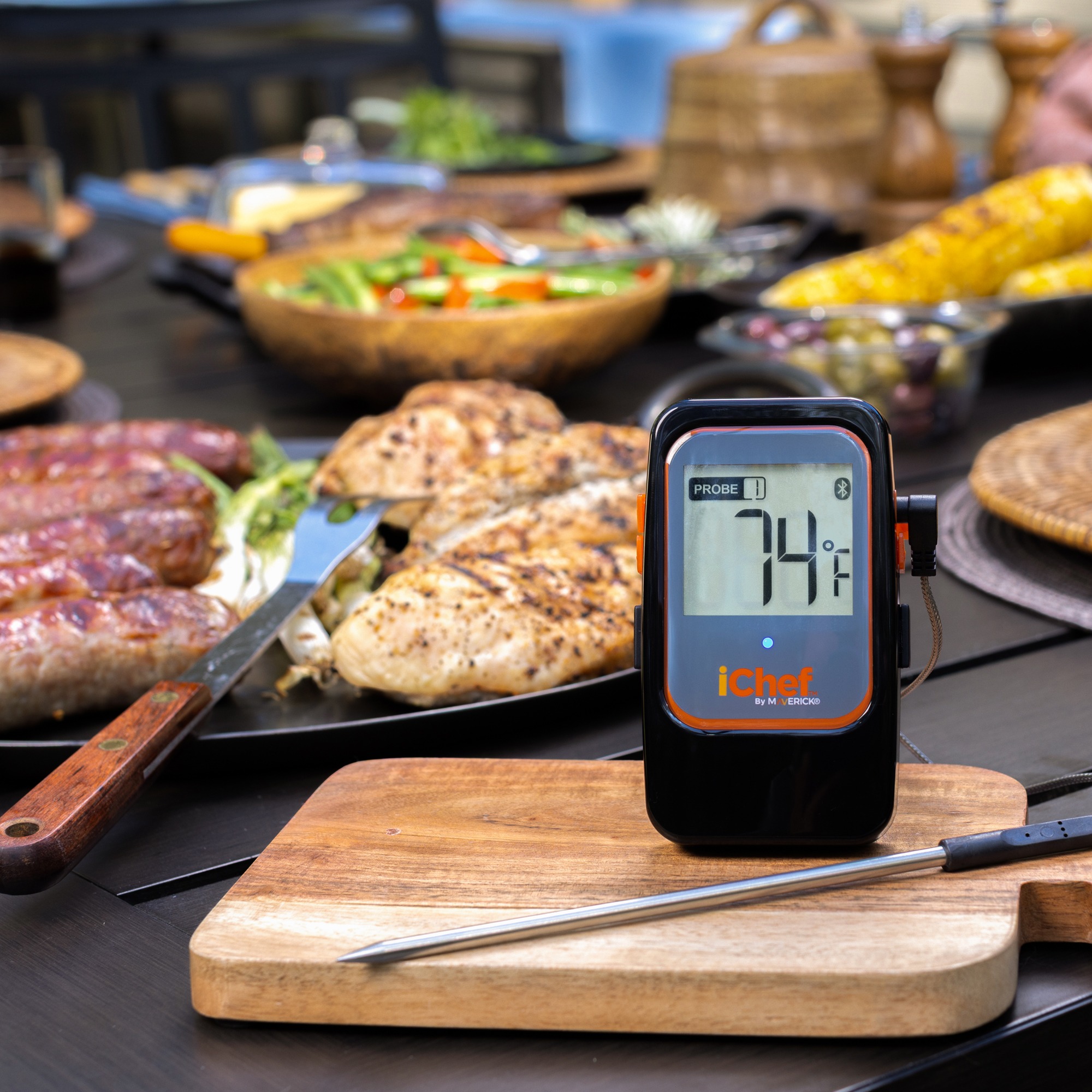
No longer do you need to interrupt a conversation or brave the elements to check your brisket. These innovative devices communicate wirelessly with a receiver or your smartphone, providing real-time temperature updates from a comfortable distance. This leap in technology isn’t just about convenience; it’s about achieving consistent “PerfectCook” results, enhancing food safety by eliminating premature removal or overcooking, and truly mastering your craft with confidence.
Unpacking the Tech: Types and Essential Features of Wireless Digital Meat Thermometers
The world of wireless digital meat thermometers offers a spectrum of options, each designed to cater to different cooking styles and preferences. Understanding the core technologies and features is key to finding your ideal cooking companion.
Connectivity: Bluetooth, Wi-Fi, and Radio Frequency (RF)
The primary distinction among these thermometers lies in how they communicate wirelessly:
- Bluetooth Meat Thermometers: These are common and connect directly to your smartphone or a dedicated receiver within a relatively short range, typically up to 100-200 feet, often less with obstructions like walls. They are excellent for backyard grilling or oven cooking where you’re within close proximity.
- Wi-Fi Meat Thermometers: Offering a significantly extended range, Wi-Fi models connect to your home network, allowing you to monitor your cook from virtually anywhere with internet access. This is ideal for long smokes or roasts, enabling you to run errands or relax without losing track of your food’s progress. Many also offer cloud connectivity for logging cook data.
- Radio Frequency (RF) Meat Thermometers: Some high-end models, like certain ThermoWorks units, utilize proprietary RF technology, which can offer impressive long-range performance (up to 1,500 feet line-of-sight) and are often less susceptible to signal interference than Bluetooth in certain environments. They typically use a dedicated receiver rather than directly connecting to a phone app.
Probe Design and Sensors
The probe is the heart of any wireless digital meat thermometer. Modern designs boast several innovations:
- Dual Sensors: Many probes feature two sensors: one for the internal temperature of the meat and another for the ambient temperature of the cooking environment (grill, oven, smoker). This is crucial for precise cooking, especially in smokers where maintaining a stable ambient temperature is as important as monitoring the meat.
- Multi-Point Sensors: Advanced probes, such as those found in MEATER models, can measure temperatures at multiple points along their length. This helps account for uneven cooking or proximity to bones/fat, providing a more accurate overall picture of doneness.
- Multi-Probe Systems: For ambitious cooks handling multiple cuts of meat or needing to monitor different areas of a large roast, systems with two, four, or even more probes are available. Each probe connects to a separate channel on the app or display, allowing individualized monitoring.
- High Heat Resistance: Quality probes are built to withstand extreme temperatures, with some handles enduring up to 1000°F or more, making them suitable for intense grilling or deep frying.
- Waterproof & Dishwasher-Safe: For easy cleanup, many probes are fully waterproof, a boon for sous vide cooking or simply rinsing off grease without worry.
Smart App Integration
The companion app is where the “smart” in “wireless digital meat thermometer” truly shines. These apps often provide:
- Guided Cooking Programs: Select your protein and desired doneness, and the app will guide you through the cooking process, often with estimated cook times.
- Customizable Alerts: Set notifications for target temperatures, “early warnings” (e.g., five minutes before done), ambient temperature drops, or if the probe loses connection.
- Cook History & Analytics: Track past cooks, review temperature graphs, and learn from successes (or adjust for future attempts). This data is invaluable for refining your culinary skills.
- Shareable Links: Some apps allow you to share your cook progress with others, perfect for coordinating holiday meals or showing off your grilling prowess.
Battery Life and Durability
Wireless digital meat thermometers typically feature either rechargeable lithium batteries or rely on disposable AAA/AA batteries. Rechargeable units are convenient, often offering 12+ hours of cooking time on a quick charge. Durability is also a major consideration; look for robust construction that can withstand the rigors of frequent use and high heat.
Thiếu hoặc sai id. Bảng có sẵn: [amz id="meat-thermometer"]
Mastering Your Cook: A Step-by-Step Guide to Using Your Wireless Digital Meat Thermometer
Using a wireless digital meat thermometer might seem intimidating at first, but it’s surprisingly straightforward and quickly becomes an indispensable part of your cooking routine. Here’s how to ensure PerfectCook results every time:
- Preparation and Insertion: Before you even think about heat, ensure your probe is clean and, if rechargeable, fully charged. When inserting the probe, aim for the thickest part of the meat, making sure to avoid any bones or large pockets of fat or gristle, as these can skew readings. For optimal accuracy, the tip of the probe should be in the very center of the thickest area.
- Connect and Configure: Power on your thermometer and connect it to its accompanying app on your smartphone or dedicated receiver. Most modern apps offer intuitive interfaces where you can select the type of protein you’re cooking (e.g., beef, chicken, pork), the desired doneness level (e.g., medium-rare, well-done), and set your target internal temperature. Many apps also include USDA recommended temperatures for food safety, a great feature for new cooks.
- Monitor and Relax: Once set up, place your meat in the oven, grill, or smoker. Now comes the best part: you can step away! Your wireless digital meat thermometer will continuously monitor the internal temperature and, in many cases, the ambient cooking temperature. You’ll receive real-time updates directly on your device, giving you the freedom to tend to other tasks or simply enjoy the company of friends and family.
- Heed the Alerts: Your thermometer will notify you when your meat is approaching its target temperature, and again when it reaches it. Pay close attention to these alerts. Some smart thermometers even provide “rest alerts” or “carryover cooking” estimates, factoring in the temperature rise that occurs after removing the meat from the heat.
- The Resting Phase: This crucial step is often overlooked but vital for juicy, tender results. Once your meat reaches its target temperature, remove it from the heat and allow it to rest for several minutes (the exact time depends on the size and type of meat). During this time, the internal temperature will continue to rise slightly (carryover cooking), and the juices will redistribute, ensuring every bite is succulent.
By following these simple steps, you’ll eliminate the guesswork and confidently achieve perfectly cooked meals with your wireless digital meat thermometer.
Tips and Tricks for PerfectCook Results Every Time
To truly leverage the power of your wireless digital meat thermometer and consistently achieve PerfectCook excellence, consider these expert tips:
- Calibrate Regularly: Even the most advanced wireless digital meat thermometers can drift slightly over time. Calibrating your device a few times a year, or as recommended by the manufacturer, ensures accurate readings. A simple ice bath test (probe in a glass of ice water should read 32°F / 0°C) is a quick way to check its precision. If it’s off, follow your manual’s recalibration instructions.
- Strategic Probe Placement: While the thickest part is generally the rule, be mindful of specific cuts. For poultry, ensure the probe is in the thickest part of the thigh or breast, away from bone. For roasts, consider placing multiple probes if your thermometer supports it, especially if the cut is uneven, to get a comprehensive temperature profile. “Don’t just stick it in anywhere; consider the geometry of your meat. A bone or a fatty pocket can give you a false sense of security,” advises Chef Elena Petrova, a renowned culinary instructor focusing on precision cooking.
- Utilize Ambient Temperature Readings: If your wireless digital meat thermometer includes an ambient sensor, pay attention to this reading. It’s crucial for understanding your cooking environment, especially in smokers or grills where temperature fluctuations can be significant. An unexpected drop in ambient temperature might signal a need to add more fuel or adjust heat settings.
- Leverage Multi-Probe Systems: If you’re cooking multiple items or a large, complex cut like a turkey or a whole hog, a multi-probe wireless digital meat thermometer is invaluable. Label your probes in the app (e.g., “Thigh,” “Breast,” “Pork Butt 1,” “Pork Butt 2”) to easily track each one individually and ensure everything reaches its perfect doneness simultaneously.
- Clean with Care: While some probes are dishwasher-safe, always hand-wash the probe itself with warm, soapy water, wiping down the digital components (if any) with a damp cloth. Never submerge the transmitter or display in water unless explicitly stated by the manufacturer. Proper cleaning and drying immediately after use prolong the life of your device.
- Battery Management: For rechargeable units, always return the probe to its charger after use to ensure it’s ready for your next culinary adventure. If your thermometer uses disposable batteries, keep a fresh set handy so you’re never caught mid-cook with a dead battery.
- Embrace the App Features: Don’t just use the app for temperature readings. Explore guided cooks, experiment with different presets, and review your cook history. This data can offer insights into your cooking process, helping you replicate successes and troubleshoot less-than-perfect results. The estimated cook time feature can be particularly useful for planning your meals.
By integrating these tips into your cooking routine, your wireless digital meat thermometer will become an even more powerful ally in achieving culinary perfection.
Beyond the Guesswork: The Undeniable Benefits of Wireless Meat Thermometers
The advantages of integrating a wireless digital meat thermometer into your cooking arsenal extend far beyond simple temperature readings. These devices fundamentally change how we approach cooking, leading to a host of benefits that make them a must-have for any kitchen.
- Eliminates Overcooking and Undercooking: This is arguably the most significant benefit. By providing precise, real-time internal temperature data, a wireless digital meat thermometer ensures your meat reaches the exact doneness you desire, every single time. No more dry chicken, tough pork, or raw centers – just perfectly cooked, juicy results.
- Enhanced Food Safety: Undercooked meat can harbor harmful bacteria. By accurately monitoring the internal temperature and comparing it to USDA guidelines (often built into the app), you can cook with confidence, knowing your food is safe for consumption without sacrificing taste or texture.
- Freedom from the Grill or Oven: The “wireless” aspect is pure liberation. Whether you’re entertaining guests, preparing side dishes, or simply relaxing, you can monitor your cook from afar. No more constant opening of oven doors (which drops the temperature) or standing over a hot grill. This convenience makes cooking more enjoyable and less stressful.
- Consistency and Culinary Confidence: With a wireless digital meat thermometer, you can replicate your best cooks time and time again. The ability to track and analyze temperature curves through smart apps helps you understand the nuances of different cuts and cooking methods, building your expertise and confidence in the kitchen.
- Versatility for Various Dishes: These thermometers are not just for grilling. They excel in ovens for roasting, in smokers for low-and-slow barbecue, in deep fryers for maintaining oil temperature, and even for sous vide cooking. Their adaptability makes them a valuable tool for a wide range of culinary applications.
- Optimized Resting Times: Many smart thermometers factor in “carryover cooking” and guide you through the crucial resting phase, ensuring that juices redistribute evenly, resulting in a more tender and flavorful final product.
Investing in a wireless digital meat thermometer means investing in consistently delicious meals, enhanced safety, and a more relaxed, enjoyable cooking experience. It’s the ultimate tool for achieving PerfectCook perfection.
Choosing Your PerfectCook Companion: What to Look for When Buying
Selecting the right wireless digital meat thermometer is a personal choice, depending on your cooking habits, budget, and desired features. Here’s a rundown of what to consider to ensure you pick a PerfectCook companion that truly fits your needs:
- Your Primary Cooking Style:
- Grilling/Smoking: Look for probes with high ambient temperature resistance and extended wireless range (RF or Wi-Fi are often superior here). Multi-probe options are great for managing different items or large briskets.
- Oven Roasting: Bluetooth or Wi-Fi models work well. Ambient temperature monitoring is less critical than for smoking but still useful.
- Sous Vide/Deep Frying: Ensure the probe is fully waterproof and can withstand submersion in liquids.
- Number of Probes:
- Single Probe: Perfect for occasional cooks, small cuts, or if you only need to monitor one item at a time.
- Multi-Probe (2-6+): Ideal for larger meals, smoking multiple racks of ribs, or cooking different cuts simultaneously to varying doneness levels.
- Wireless Range and Connectivity:
- Bluetooth: Good for close-range monitoring (e.g., backyard grilling), but walls and distance can limit signal.
- Wi-Fi: Offers the longest range, often cloud-based, allowing monitoring from anywhere with internet access. Great for long cooks where you might leave home.
- RF: Can offer a very stable, long-range connection with a dedicated receiver, often preferred by serious pitmasters.
- App Features vs. Simple Display:
- App-Centric: Offers guided cooking, cook history, advanced alerts, and greater customization. Requires a smartphone.
- Remote Display: Simple, clear temperature readings on a dedicated handheld unit. May be preferred if you don’t want to rely on your phone or deal with app interfaces. Some models offer both.
- Temperature Range and Accuracy: Ensure the thermometer’s operating range (both internal and ambient) covers the types of cooking you do. Look for models with high accuracy ratings (e.g., ±1°F or less). The ability to calibrate is a bonus.
- Battery Type: Decide if you prefer the convenience of a rechargeable probe (often with a base that also charges) or the flexibility of disposable batteries. Consider battery life per charge/set.
- Durability and Build Quality: Look for probes made from high-grade stainless steel that can withstand repeated use and high heat. Waterproofing is a desirable feature for easy cleaning and versatility.
- Budget: Wireless digital meat thermometers range from entry-level Bluetooth models to professional-grade Wi-Fi/RF systems. Determine your budget and the features that are most important to you.
By carefully considering these factors, you’ll be well-equipped to choose a wireless digital meat thermometer that perfectly complements your cooking style and helps you consistently achieve PerfectCook results.
Frequently Asked Questions (FAQ)
Are wireless digital meat thermometers accurate?
Yes, most high-quality wireless digital meat thermometers are designed to be very accurate, often within ±1°F (±0.5°C). However, like any precision instrument, regular calibration (typically with an ice bath test) is recommended to ensure continued accuracy.
Can you leave a wireless digital meat thermometer in the meat while it’s cooking?
Absolutely! One of the primary benefits of a wireless digital meat thermometer is that its probe is designed to be left in the meat throughout the cooking process, allowing for continuous, real-time monitoring without needing to open your oven or grill. Just ensure the probe’s handle and any connected wires are rated for the high ambient temperatures of your cooking environment.
What’s the difference between Bluetooth and Wi-Fi meat thermometers?
Bluetooth thermometers connect directly to your smartphone or a dedicated receiver over a relatively short range (typically 100-200 feet), ideal for close-range monitoring. Wi-Fi thermometers connect to your home Wi-Fi network, offering a much greater range (often allowing you to monitor from anywhere with internet access via cloud connectivity), which is perfect for longer cooks or when you need to step away from home.
How do I clean my wireless digital meat thermometer?
Generally, the metal probe should be hand-washed with warm, soapy water and thoroughly dried. Avoid submerging the entire probe, especially the digital housing or connection points, unless the manufacturer explicitly states it’s fully waterproof. Always consult your specific model’s user manual for detailed cleaning instructions to prevent damage.
How deep should I insert the probe of a wireless digital meat thermometer?
Insert the probe into the thickest part of the meat, ensuring the tip is at the very center. It’s crucial to avoid touching any bones, gristle, or large pockets of fat, as these can give inaccurate readings. For smaller cuts, ensure the probe is inserted deep enough to get a stable reading without going all the way through.
Conclusion
Embracing the technology of a wireless digital meat thermometer is more than just upgrading a kitchen gadget; it’s elevating your entire cooking experience. From the freedom it offers to monitor your meals from a distance to the precision it brings to achieving the perfect doneness, this tool empowers you to cook with unparalleled confidence. Say goodbye to culinary guesswork and hello to consistently juicy, perfectly cooked results every single time. Take the leap, choose your PerfectCook companion, and discover the joy of effortless, expert-level cooking. Your taste buds, and your guests, will thank you!