Are you tired of guessing whether your steak is perfectly medium-rare or if your Thanksgiving turkey is safely cooked through? The secret to consistently delicious and safe meals often lies in one indispensable kitchen tool: the meat thermometer. If you’re looking to buy a meat thermometer, you’re on the path to transforming your cooking from guesswork to gourmet precision, ensuring every dish is a triumph.
The Unsung Hero of the Kitchen: A Brief History and Importance of Meat Thermometers
For centuries, cooks relied on touch, sight, and intuition to gauge doneness. But with the advent of more precise tools, especially the meat thermometer, culinary guesswork began to fade. Early models were simple analog devices, but modern technology has revolutionized them into highly accurate digital and smart instruments.
Why is this little gadget so crucial? First and foremost, it’s about food safety. Undercooked meats can harbor harmful bacteria, leading to foodborne illnesses. A reliable meat thermometer eliminates this risk by confirming your food has reached the safe internal temperature recommended by food safety experts. Beyond safety, it’s about achieving culinary excellence. Overcooked meat is dry and tough, while perfectly cooked meat is juicy, tender, and full of flavor. A meat thermometer ensures you hit that sweet spot every single time, making it an essential purchase for any home cook.
Deciphering the Digital Landscape: Types of Meat Thermometers and Their Key Features
When you decide to buy a meat thermometer, you’ll encounter a variety of types, each designed for specific cooking styles. Understanding their differences will help you choose the best fit for your kitchen adventures.
Instant-Read Thermometers
These are the speed demons of the thermometer world. You insert the thin probe into the thickest part of your food for a few seconds, and it quickly displays the internal temperature, often within 1-4 seconds.
- Pros: Extremely fast and accurate, perfect for quick checks on grills, stovetops, or when pan-roasting. Many models are compact and easy to store.
- Cons: Not designed to be left in food during cooking, as they aren’t typically oven-safe. You need to open the oven or grill to take a reading, which can cause heat loss.
- When to Use: Ideal for steaks, chicken breasts, burgers, fish, or anything that cooks relatively quickly or requires frequent, quick checks.
Leave-In Probe Thermometers
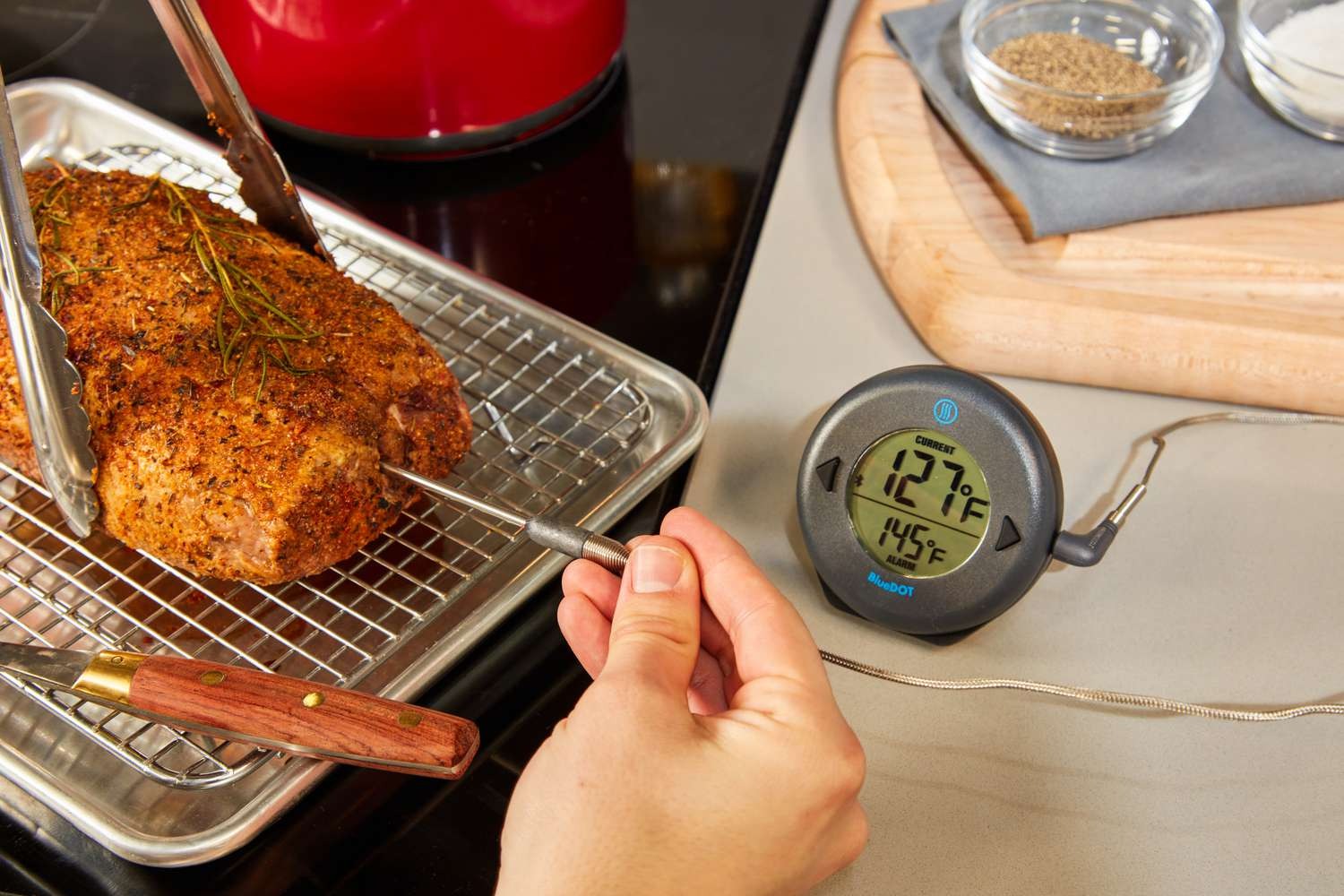
These thermometers are designed for continuous monitoring. A heat-resistant probe is inserted into the meat and stays there throughout the cooking process. The probe is connected by a wire to an external display unit, which often features alarms that sound when your desired temperature is reached.
- Pros: Allows you to monitor temperature without opening the oven, grill, or smoker, preventing heat loss. Great for large roasts, briskets, and turkeys. Many offer programmable alarms.
- Cons: The wires can sometimes be cumbersome, and the external unit needs a place to sit. Response times can be slightly slower than instant-read models.
- When to Use: Perfect for slow roasting, smoking, barbecuing, or any long-duration cooking where you want to track temperature progression.
Wireless and Smart Meat Thermometers
Taking the leave-in concept to the next level, wireless thermometers often connect via Bluetooth or Wi-Fi to a smartphone app. Some models are entirely wire-free, featuring a probe with built-in transmitters.
- Pros: Unparalleled convenience, allowing you to monitor your cook from across the house or yard. Apps often include preset temperatures for different meats, estimated cooking times, and even guided cooking programs. Many come with multiple probes for cooking various items simultaneously.
- Cons: Can be more expensive than other types. Relies on battery power for both the probe and the receiver/smartphone. Signal range can vary.
- When to Use: Excellent for outdoor grilling, smoking, or when you want the freedom to step away from the kitchen without worrying about your meal.
While traditional analog dial thermometers still exist, they generally lack the speed and accuracy required for precise cooking and food safety, making digital options a far superior choice when you buy a meat thermometer.
Mastering Your Cook: How to Use a Meat Thermometer Correctly
Using a meat thermometer isn’t complicated, but proper technique is key to getting accurate readings and ensuring food safety.
- Placement is Paramount: Always insert the thermometer probe into the thickest part of the meat. Ensure the tip of the probe is not touching any bones, gristle, or fat, as these can give inaccurate readings. For whole poultry, insert into the thickest part of the thigh, avoiding the bone.
- Target Temperatures: Familiarize yourself with the safe internal temperatures for different types of meat. For example, poultry generally needs to reach 165°F (74°C), while ground beef is safest at 160°F (71°C). Many thermometers come with guides or app presets to help you.
- Resting Period: Remember that meat continues to cook even after it’s removed from the heat – this is called carryover cooking. For best results, take the meat off the heat a few degrees before it reaches its target temperature, then let it rest. During resting, the temperature will typically rise by a few degrees, and juices will redistribute, leading to a more tender and flavorful result.
- Calibration (if applicable): Some digital thermometers allow for calibration to ensure ongoing accuracy. Check your thermometer’s manual for instructions, often involving an ice bath or boiling water test.
Keeping It Sharp: Tips for Using and Storing Your Meat Thermometer
To ensure your meat thermometer remains a reliable kitchen companion for years to come, a little care goes a long way.
- Cleanliness is Key: After each use, wipe down the probe thoroughly with an antibacterial wipe or wash it with hot, soapy water. For wired probes, be careful not to immerse the entire unit in water unless it’s specifically rated as waterproof.
- Battery Management: For digital and wireless models, keep an eye on battery life. Many feature auto-shutoff functions to conserve power, but it’s always good to have spare batteries on hand, especially before a big cook.
- Smart Storage: Store your thermometer in a drawer where the probe won’t be bent or damaged. Many instant-read thermometers come with protective sheaths or have foldable probes, making storage simple and safe. If your probe thermometer has a magnetic backing, stick it to your oven or grill for easy access.
Beyond Doneness: The Myriad Benefits of Using a Meat Thermometer
The benefits of incorporating a meat thermometer into your cooking routine extend far beyond just avoiding undercooked food.
- Food Safety Confidence: This is paramount. Knowing your food has reached the proper internal temperature provides peace of mind, especially when cooking for family and friends.
- Consistent Culinary Perfection: Say goodbye to dry chicken or an overcooked roast. A thermometer ensures your food is cooked exactly to your preferred doneness every single time, preserving its natural juices and tenderness.
- Saving Expensive Cuts: When you invest in a prime cut of meat, the last thing you want is to ruin it by overcooking. A meat thermometer protects your investment, ensuring a perfect result.
- Versatility in the Kitchen: While primarily for meat, many thermometers have a broad temperature range suitable for other tasks, such as tempering chocolate, making candy, brewing beer, or deep-frying.
- Reduces Stress: Cooking for a crowd can be stressful. A reliable meat thermometer takes the guesswork out of the most critical step, allowing you to focus on other aspects of your meal.
As Chef Julian Vance often says, “A meat thermometer isn’t just a gadget; it’s your culinary compass, guiding every dish to perfection and ensuring peace of mind with every bite.”
Making the Right Choice: Factors to Consider When You Buy a Meat Thermometer
Ready to elevate your cooking? Here’s what to look for when you decide to buy a meat thermometer that’s perfect for you:
- Accuracy and Speed: These are non-negotiable. Look for models that boast accuracy within ±1°F (±0.5°C) and provide readings in just a few seconds, especially for instant-read types.
- Temperature Range: Ensure the thermometer covers the full spectrum of temperatures you’ll need, from safe meat doneness (typically 120°F-200°F) to potentially higher temperatures for candy making or deep-frying (up to 400°F-500°F).
- Probe Length: For larger roasts and turkeys, a longer probe (5 inches or more) is beneficial to reach the center without burning your hand. Shorter probes are fine for thinner cuts.
- Display Readability: A large, clear, backlit display is crucial, especially when cooking in low light conditions (like a grill at night). Auto-rotating screens are a nice bonus for convenience.
- Durability and Water Resistance: Kitchens can be messy places. A thermometer with a robust construction and some level of water resistance (e.g., splash-proof or waterproof) will stand up to splashes and make cleaning easier.
- Connectivity (for smart thermometers): If you opt for a wireless model, check the reliability of its Bluetooth or Wi-Fi connection and the intuitiveness of its accompanying app.
- Budget: Meat thermometers range widely in price. Determine your needs and how often you’ll use it to find the best value for your investment. There are excellent budget-friendly options, as well as premium models with advanced features.
Frequently Asked Questions (FAQ)
What’s the difference between an instant-read and a leave-in thermometer?
An instant-read thermometer gives a quick temperature snapshot and is removed immediately after reading, while a leave-in thermometer stays in the food during cooking, continuously monitoring its temperature.
Can I leave my meat thermometer in the oven or grill?
Only leave-in probe thermometers are designed to be left in the oven or grill. Instant-read thermometers are not oven-safe and can be damaged by prolonged exposure to high heat.
How accurate should a good meat thermometer be?
A high-quality meat thermometer should offer accuracy within ±1°F (±0.5°C) to ensure precise cooking and food safety.
What’s the ideal temperature range for a meat thermometer?
For general meat cooking, a range from about 32°F (0°C) to 220°F (104°C) is sufficient. If you plan to make candy or deep-fry, look for a thermometer with an upper limit closer to 500°F (260°C).
Are wireless meat thermometers reliable?
Modern wireless meat thermometers from reputable brands are generally very reliable, offering consistent connectivity and accurate readings through their apps. However, range and battery life can vary between models.
How do I clean my meat thermometer?
For most digital probes, wipe the shaft with an antibacterial wipe or wash with hot, soapy water. Avoid immersing the entire unit unless it is explicitly stated to be waterproof.
What are the safe internal temperatures for different meats?
While specific preferences vary, general safe internal temperatures include:
- Poultry (whole or ground): 165°F (74°C)
- Ground Meats (beef, pork, lamb): 160°F (71°C)
- Beef, Pork, Lamb (steaks, roasts, chops – medium-rare): 145°F (63°C) with a 3-minute rest
- Fish: 145°F (63°C)
A World of Perfect Cooks Awaits
Investing in a quality meat thermometer is one of the smartest decisions you can make for your kitchen. It’s the key to unlocking perfectly cooked, flavorful meals every time, transforming you from an uncertain cook into a confident culinary artist. No more dry roasts, no more questionable poultry – just pure, delicious perfection. So, take the leap, explore the options, and buy a meat thermometer that will revolutionize your cooking experience. Your taste buds, and your guests, will thank you.