Imagine consistently pulling perfectly cooked, juicy meat from your air fryer every single time. No more dry chicken, underdone pork, or overcooked steak. The secret? A reliable meat thermometer. As PerfectCook’s trusted advisor, I’m here to tell you that this simple tool is a game-changer for anyone serious about elevating their air frying game. While air fryers are fantastic for achieving that desirable crispy exterior, ensuring the internal doneness of your proteins is where a meat thermometer truly shines, transforming guesswork into culinary precision.
Why Using a Meat Thermometer in Your Air Fryer is a Game-Changer
Air fryers cook food incredibly fast and efficiently, often creating a beautifully browned or crispy surface that can be deceiving. Relying solely on cooking time charts or visual cues often leads to inconsistent results. That’s where the meat thermometer steps in, providing accuracy and peace of mind.
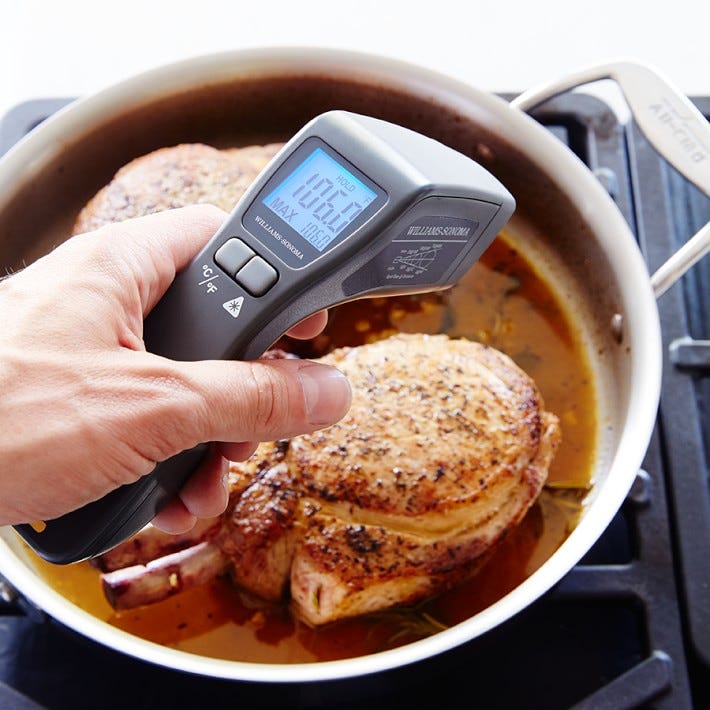
- Ensuring Food Safety: This is paramount. Undercooked meats can harbor harmful bacteria. A meat thermometer confirms that your food has reached a safe internal temperature, protecting you and your loved ones.
- Achieving Perfect Doneness: Whether you prefer your steak medium-rare or your chicken perfectly moist, a thermometer ensures you hit that sweet spot every single time. It’s the difference between merely cooked and perfectly cooked.
- Consistency in Every Bite: Once you know the ideal internal temperature for your desired doneness, you can replicate those results consistently. No more guessing, just delicious, reliable outcomes.
- Maximizing Your Air Fryer’s Potential: Your air fryer is a versatile tool. Pairing it with a meat thermometer unlocks its full capability, allowing you to confidently cook a wider variety of meats, from thick roasts to delicate fish fillets, all to perfection.
Types of Meat Thermometers Perfect for Air Fryers
The good news is that many types of meat thermometers you’d use for conventional cooking also work wonderfully in an air fryer. However, some designs offer distinct advantages for this quick-cooking appliance.
Instant-Read Thermometers
These are your quick-check heroes. Instant-read thermometers, like the Thermapen ONE, are designed to give you a precise temperature reading in just one to three seconds. They’re invaluable for spot-checking doneness without significantly interrupting the cooking process.
Why they’re great for air fryers: Air frying is fast, and you don’t want to leave the drawer open too long. An instant-read thermometer allows for a rapid check.
Best use cases:
- Spot-checking smaller cuts like chicken wings, tenders, or fish fillets.
- Verifying the temperature of larger cuts after removing them from the air fryer.
- Checking doneness in multiple spots to ensure even cooking.
To use an instant-read thermometer in your air fryer, simply open the drawer, insert the probe into the thickest part of the meat (avoiding bone), take your reading, and quickly close the drawer. If more cooking time is needed, return the food to the air fryer and check again later.
Leave-in Probe Thermometers
For larger cuts of meat that require longer cooking times, leave-in probe thermometers are your best friend. These thermometers monitor the internal temperature continuously as your food cooks, often with an alarm that sounds when your target temperature is reached.
Wired Leave-in Thermometers
These consist of a probe connected by a heat-resistant wire to an external display unit.
Considerations for air fryers: The primary concern here is the wire itself. You need to ensure your air fryer has a small gap in its seal where the wire can safely fit without being pinched or damaged. Brands like Thermapen have tested models like the DOT with popular air fryers to confirm compatibility, but it’s always wise to check your specific air fryer.
Best use cases:
- Roasts (pork loin, small whole chickens).
- Thicker cuts of steak or chicken breast where you want constant monitoring.
Wireless Leave-in Thermometers
This category has revolutionized air frying for many home cooks. Wireless thermometers, such as the Meater+, MeatStick V, or Ninja ProChef Wireless Thermometer, eliminate the need for wires altogether. The probe itself is entirely wireless, communicating with a base unit or directly with your smartphone via Bluetooth or Wi-Fi.
Why they’re ideal for air fryers:
- No wire hassle: You don’t have to worry about pinching a wire or compromising the air fryer’s seal.
- Real-time monitoring: Many come with dedicated apps that allow you to track the internal temperature (and often ambient temperature) from your phone, sometimes even providing estimated cook times and customizable doneness levels.
- High heat resistance: Models like the MeatStick V are engineered to withstand extreme air fryer temperatures, sometimes up to 1200°F (650°C), making them incredibly durable.
As culinary expert Chef Antoine Dubois of “Gourmet Air Frying” notes, “Wireless meat thermometers are a true innovation for air fryer users. They remove all the friction of monitoring internal temperatures, letting you truly ‘set it and forget it’ until the alarm on your phone goes off. It’s precise, safe, and utterly convenient.”
Air Fryers with Integrated Probes
Some advanced air fryer models now come with built-in wireless probes. The Typhur Sync Air Fryer, for example, features a 5-point wireless probe that automatically shuts off the air fryer when the target temperature is met. Philips also offers models with integrated food thermometers.
Benefits: Ultimate convenience and integration, often with app control and automated cooking cycles based on temperature.
How to Use a Meat Thermometer in Your Air Fryer for Perfect Results
Using a meat thermometer in your air fryer is straightforward, but a few best practices will ensure you get the most accurate readings and the best results.
Placement is Key
Always insert the probe into the thickest part of the meat. This is where the food cooks slowest, so it’s the most critical area to monitor for doneness.
- Avoid bone: Bones conduct heat faster than meat, leading to inaccurate readings.
- Avoid fat or gristle: These can also give false low readings.
- Center the probe: Ensure the tip of the probe is in the very center of the thickest part for the most accurate internal temperature.
Setting Your Desired Temperature
Knowing the safe internal temperatures for different meats is crucial for both safety and optimal texture.
- Poultry (Chicken, Turkey): 165°F (74°C)
- Ground Meats (Beef, Pork, Lamb): 160°F (71°C)
- Beef, Pork, Lamb (Steaks, Roasts, Chops):
- Rare: 125-130°F (52-54°C)
- Medium-Rare: 130-135°F (54-57°C)
- Medium: 135-140°F (57-60°C)
- Medium-Well: 140-145°F (60-63°C)
- Well-Done: 150°F+ (66°C+)
- Fish: 145°F (63°C)
Set your thermometer to alarm a few degrees below your target temperature, especially for larger cuts.
Monitoring Your Cook
- For wired/wireless probes: Monitor the temperature display on your external unit or smartphone app. Many apps provide graphs, estimated finish times, and notifications, allowing you to relax until your meat is ready.
- For instant-read thermometers: Check periodically towards the end of the cooking time. For example, for a chicken breast that typically takes 15-20 minutes, you might check around the 10-12 minute mark, then every few minutes until it reaches your desired temperature.
Accounting for Carry-Over Cooking
Meat continues to cook after it’s removed from the heat source due to residual heat, a phenomenon known as “carry-over cooking.” For larger cuts, the internal temperature can rise by an additional 5-10°F (3-5°C) during resting. To avoid overcooking, remove your meat from the air fryer a few degrees before it reaches the final desired temperature and let it rest. This also allows juices to redistribute, leading to a more tender and flavorful result.
Choosing the Best Meat Thermometer for Your Air Fryer
With so many options available, picking the right meat thermometer for your air fryer can feel daunting. Here are the key features PerfectCook recommends considering:
Key Features to Look For
- Heat Resistance: Air fryers operate at high temperatures. Ensure your thermometer probe can safely withstand the maximum temperature of your air fryer, typically up to 400-450°F (200-230°C), with some wireless probes handling even higher.
- Accuracy: Look for thermometers with high accuracy, often stated as ±1°F or better. NIST-verified probes offer exceptional precision.
- Connectivity (Bluetooth/Wi-Fi): For wireless models, assess the range and reliability of the connection to your smartphone. A strong, consistent connection is essential for effective remote monitoring.
- App Functionality: If choosing a smart thermometer, evaluate its accompanying app. Look for user-friendly interfaces, pre-set temperature guides for various meats, custom alarms, cooking graphs, and estimated cook times.
- Probe Design and Length: A slim probe causes minimal damage to the meat, preserving juices. Ensure the probe is long enough to reach the thickest part of larger cuts but not so long it’s cumbersome for smaller items.
- Durability and Ease of Cleaning: A well-built thermometer will last. Look for waterproof or water-resistant designs for easy cleaning. Stainless steel probes are standard and hygienic.
“When selecting a meat thermometer for your air fryer, don’t just focus on the price tag,” advises Maria Rodriguez, a product development specialist at PerfectCook. “Consider how frequently you’ll use it, the types of food you typically cook, and whether a wired, wireless, or instant-read model best fits your cooking style. Investing in a quality thermometer is investing in consistently perfect meals.”
Expert Tips from PerfectCook
Here at PerfectCook, we believe everyone deserves to enjoy perfectly cooked meals. Here are some pro tips for using your meat thermometer with an air fryer:
- Calibrate Regularly: Even the best thermometers can drift over time. Check your thermometer’s accuracy periodically using an ice bath (should read 32°F / 0°C) or boiling water (should read 212°F / 100°C at sea level).
- Keep it Clean: Always clean your thermometer probe thoroughly after each use to prevent cross-contamination and ensure accurate readings.
- Read the Manual: Familiarize yourself with your specific thermometer’s instructions, especially regarding maximum heat exposure for the probe and wire.
- Don’t Overcrowd: An overcrowded air fryer basket can lead to uneven cooking. Cook in batches if necessary, and ensure enough space for air to circulate.
- Consider Dual Thermometers: For ultimate precision, use a leave-in probe for continuous monitoring and an instant-read thermometer for a final, quick verification in multiple spots after resting.
Frequently Asked Questions (FAQ)
Can I use any meat thermometer in an air fryer?
While you can use most meat thermometers, it’s crucial to consider heat resistance. Instant-read thermometers are generally safe for quick checks. For leave-in probes, ensure the probe and its wire (if applicable) can withstand the high temperatures of an air fryer and that the wire won’t be pinched by the door seal. Wireless thermometers are often the most hassle-free option for continuous monitoring in an air fryer.
What are the safe internal temperatures for different meats?
The USDA recommends 165°F (74°C) for all poultry (whole or ground), 160°F (71°C) for ground meats (beef, pork, lamb), and 145°F (63°C) for whole cuts of beef, pork, and lamb (followed by a 3-minute rest). Fish also reaches doneness at 145°F (63°C). Always refer to reliable food safety guidelines for specific recommendations.
How do I clean my meat thermometer?
For most probes, simply wipe them clean with a damp cloth and mild soap immediately after use. Avoid submerging the main display unit of wired thermometers in water. Many wireless probes are designed to be fully washable. Always check your specific thermometer’s care instructions.
Will the wire of a wired thermometer damage my air fryer?
If your air fryer’s door seal is tight and doesn’t have a designated gap for a wired probe, continuously pinching the wire can eventually damage both the wire and the seal. It’s recommended to use wired thermometers only if your air fryer design allows for the wire to pass through safely without damage. Wireless options eliminate this concern.
Are wireless thermometers worth the investment for an air fryer?
Absolutely! Wireless meat thermometers offer unparalleled convenience and precision for air frying. They eliminate the need to open the air fryer drawer repeatedly, provide real-time updates to your smartphone, and often come with smart features like custom alerts and cooking presets. For consistent, perfectly cooked results with minimal effort, a quality wireless meat thermometer is an excellent investment.
Unlock Perfect Air-Fried Meals with Confidence
The air fryer has become a staple in modern kitchens, celebrated for its ability to create crispy, delicious meals with less oil. But to truly master this appliance and ensure every dish is a triumph, a meat thermometer is not just a tool—it’s an essential partner. By understanding the different types, proper usage, and key features to look for, you’re empowered to make informed choices that will lead to consistently safe, succulent, and perfectly cooked results.
So go ahead, embrace the precision a meat thermometer for your air fryer brings. Experiment with new cuts of meat, cook with confidence, and enjoy the delicious, perfectly prepared meals that await. Happy air frying from PerfectCook!