Cooking meat to absolute perfection is an art, but it shouldn’t feel like a guessing game. The secret to consistently juicy roasts, perfectly seared steaks, and safely cooked poultry lies in one indispensable kitchen tool: the meat thermometer. If you’ve ever wondered how professional chefs achieve that ideal doneness every single time, this is their go-to secret. For us at PerfectCook, it’s not just about cooking; it’s about mastering the heat, and the right meat thermometer is your trusted ally in this journey.
The Indispensable Tool: A Brief History and Why It Matters
Believe it or not, our ancestors relied purely on touch, sight, and experience to gauge meat doneness. While traditional methods have their charm, they also carry risks of either undercooking, which can lead to foodborne illnesses, or overcooking, resulting in dry, tough, and disappointing meals. The evolution of the meat thermometer transformed home cooking from an intuitive, often hit-or-miss process into a precise science.
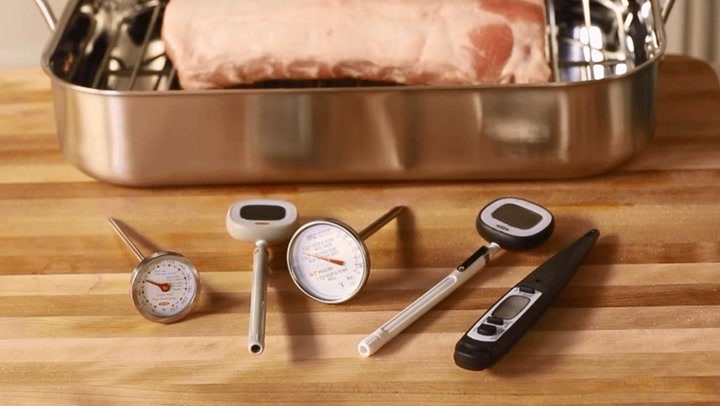
Today, using a meat thermometer isn’t just a suggestion; it’s a fundamental practice for both food safety and culinary excellence. It removes all the guesswork, ensuring that every bite is exactly how it should be: safe, succulent, and bursting with flavor. As culinary expert Chef Leo Maxwell often says, “A meat thermometer is the most important ingredient for peace of mind in the kitchen. It guarantees not just taste, but health.”
Decoding the Options: Types of Meat Thermometers and Their Features
The world of meat thermometers offers a variety of choices, each designed to excel in different cooking scenarios. Understanding these types will help you pick the perfect one for your kitchen adventures.
Instant-Read Thermometers: Speed and Precision on Demand
Imagine needing to quickly check the internal temperature of a steak on the grill or a chicken breast in a hot pan. That’s where instant-read thermometers shine. They live up to their name by providing rapid temperature readings, often in just 1 to 3 seconds.
- Key Features: Fast response times, high accuracy, and usually a slim, digital display. Many have foldable probes for easy storage. They are perfect for quick checks, deep-frying oil, or even candy making.
- Ideal Use: Grilling, pan-frying, oven roasting (for quick spot checks when the meat is removed from the heat).
- Top Pick Consideration: The ThermoWorks Thermapen ONE is frequently lauded by experts for its exceptional speed and accuracy, reading temperatures in a mere second.
Leave-In Probe Thermometers: Set It and Forget It
For those long, slow cooks like a Thanksgiving turkey, a pork shoulder in the smoker, or a large roast in the oven, a leave-in probe thermometer is your best friend. These thermometers are designed to stay in the meat throughout the entire cooking process.
- Key Features: A heat-resistant probe connected by a wire to an external display unit, often with programmable alarms to alert you when your target temperature is reached. Some models are magnetic, attaching conveniently to your oven or grill.
- Ideal Use: Roasting, smoking, slow cooking, or any time you need to monitor temperature continuously without opening the oven or grill door.
- Expert Insight: “For big cuts, you want a continuous read,” advises Chef Isabella Rossi. “Interrupting the cooking process by constantly opening the oven to check can drastically affect your final result.”
Smart Wireless Thermometers: Modern Monitoring at Your Fingertips
Embracing modern technology, smart wireless thermometers take convenience to the next level. These innovative devices communicate with your smartphone or a dedicated receiver via Bluetooth or Wi-Fi, allowing you to monitor your cook from across the room, or even outside in the backyard.
- Key Features: App integration with preset temperatures for various meats, custom alarms, ambient temperature sensing, and multi-probe capabilities for monitoring different items simultaneously. Some are completely wire-free, offering ultimate flexibility.
- Ideal Use: Long smoking sessions, grilling where you need to step away, multi-dish cooking, or for anyone who loves smart home integration.
- Popular Choices: The Meater Plus/Pro series and models from FireBoard are highly rated for their wireless capabilities and intuitive apps.
Analog Thermometers: The Classic, No-Frills Approach
Before digital displays and wireless connectivity, there were analog thermometers. These feature a dial face and are often oven-safe, designed to be left in large cuts of meat during cooking.
- Key Features: Simple, often budget-friendly, and require no batteries.
- Considerations: Generally slower and can be harder to read precisely compared to their digital counterparts. Not recommended for quick checks on thinner cuts.
Mastering the Art: How to Use Your Meat Thermometer Correctly
Even The Best Meat Thermometer is only as good as its user. Knowing how to correctly insert and read your thermometer is crucial for accurate results.
Where to Insert: The Golden Rules
For the most accurate reading, always insert the probe into the thickest part of the meat.
- Avoid Bones and Fat: Bones conduct heat differently and can give a falsely high reading, while fat pockets can register a lower temperature than the actual meat. Aim for the center of the muscle.
- Depth Matters: For most instant-read thermometers, you only need to insert the probe about ½ inch deep. For larger cuts with an oven-safe dial thermometer, aim for 2 to 2½ inches. Always check your specific thermometer’s manual for guidance.
- Thinner Cuts: For thinner items like burger patties or chicken breasts, insert the probe horizontally from the side to ensure the tip reaches the true center.
Reading the Temperature and Carryover Cooking
Timing is everything. For instant-read thermometers, check the temperature a few minutes before the estimated finish time.
- The Rest Period: Meat continues to cook even after it’s removed from the heat source due to residual heat, a phenomenon known as “carryover cooking.” The internal temperature can rise by 5 to 10 degrees Fahrenheit during this resting period. To prevent overcooking, remove your meat from the heat when it’s about 5-10 degrees below your target final temperature, then let it rest.
- Double-Check: After resting, recheck the temperature before slicing and serving to ensure it’s reached the desired doneness.
Calibration: Keeping Your Thermometer Accurate
Like any precision tool, meat thermometers can lose accuracy over time. Regular calibration ensures reliable readings.
- The Ice Water Test: Fill a glass with crushed ice and water. Insert your thermometer probe into the mixture, ensuring it doesn’t touch the bottom or sides. After about 30 seconds (or 1-2 minutes for dial thermometers), a properly calibrated thermometer should read 32°F (0°C).
- Adjust or Account: If it’s off, follow your manufacturer’s instructions for recalibration, or simply note the difference and factor it into your cooking.
The PerfectCook Advantage: Benefits of Using a Meat Thermometer
Using a meat thermometer transforms your cooking, offering a multitude of benefits that elevate both your culinary results and your confidence in the kitchen.
Ensuring Food Safety
This is arguably the most critical benefit. A meat thermometer is the only reliable way to ensure that harmful bacteria, like salmonella or E. coli, are destroyed by cooking meat to safe minimum internal temperatures. Relying solely on visual cues like color or texture is unreliable and can lead to dangerous undercooked food.
Achieving Desired Doneness
Whether you crave a perfectly medium-rare steak or a well-done roast, a meat thermometer guarantees your preferred doneness every single time. It takes the guesswork out of hitting that sweet spot, allowing you to cook precisely to taste.
Preventing Overcooking and Dry Meat
Nobody wants a dry, tough piece of meat. Overcooking not only ruins the texture but also diminishes flavor and juiciness. A thermometer helps you pull the meat off the heat at just the right moment, preserving its natural moisture and tenderness.
Confidence and Consistency
With a meat thermometer, you’ll cook with newfound confidence. No more anxious peeking or frantic cutting into the meat. You’ll achieve consistent, delicious results batch after batch, impressing family and guests alike. It truly acts as your ideal kitchen assistant.
Choosing Your Culinary Companion: A Buyer’s Guide
Selecting the best meat thermometer depends on your specific cooking habits and needs. Here’s what to consider:
Key Factors to Consider
- Accuracy and Speed: These are paramount. Look for thermometers that provide readings quickly and reliably. Instant-read models are generally faster, while probe thermometers prioritize continuous monitoring over rapid spot-checks.
- Display: A large, clear, and backlit digital display is highly beneficial, especially for reading in dimly lit kitchens or during evening barbecues. An auto-rotating display offers added convenience.
- Probe Length: Longer probes are better for large cuts of meat like whole chickens or roasts, while shorter, thinner probes are ideal for individual cuts or delicate items.
- Temperature Range: A wide temperature range means your thermometer can be used for more than just meat—think deep-frying oil, candy making, or even chilled dishes.
- Durability and Water Resistance: Kitchens can be messy. A thermometer that is splash-proof or waterproof (rated IP67, for example) will last longer and be easier to clean.
- Connectivity (for Wireless): If opting for a smart thermometer, check the reliability of its Bluetooth or Wi-Fi connection and the intuitiveness of its accompanying app.
Recommendations for Different Needs
- For the Everyday Cook: An instant-read digital thermometer like the OXO Good Grips Chef’s Precision Digital Thermometer offers great value and versatility for daily cooking.
- For the Roasting and Smoking Enthusiast: A reliable leave-in probe thermometer such as the ThermoWorks Smoke X4 or ThermoPro TempSpike Plus provides continuous, worry-free monitoring.
- For the Tech-Savvy Chef: A smart wireless thermometer like the Meater Plus provides ultimate flexibility and advanced features for complex cooks.
- For the Budget-Conscious: Basic instant-read models from brands like ThermoPro can provide good accuracy without breaking the bank.
Frequently Asked Questions (FAQ)
Can I leave an instant-read thermometer in the oven or grill?
No, instant-read thermometers are not designed to be left in the oven or grill during cooking. They are intended for quick spot checks once the meat is removed from the heat. Leaving them in can damage the device.
How deep should I insert the probe into the meat?
For instant-read thermometers, about ½ inch deep is usually sufficient to get an accurate reading in the thickest part of the meat. For oven-safe dial or wired probe thermometers, insert 2 to 2½ inches deep. Always avoid bones and fat.
How often should I calibrate my meat thermometer?
It’s a good practice to calibrate your meat thermometer periodically, especially if you suspect it’s giving inaccurate readings or after it has experienced a drop or significant temperature changes. A simple ice water test is sufficient.
What are safe internal temperatures for common meats?
While personal preference varies, here are general safe minimum internal temperatures:
- Poultry (whole, ground, parts): 165°F (74°C)
- Ground Meat (beef, pork, veal, lamb): 160°F (71°C)
- Beef, Pork, Veal, Lamb (steaks, roasts, chops):
- Medium Rare: 145°F (63°C) (followed by a 3-minute rest)
- Medium: 160°F (71°C)
- Well Done: 170°F (77°C)
- Fish: 145°F (63°C)
Always refer to USDA guidelines for the most current food safety recommendations.
Is an analog thermometer accurate enough?
While analog thermometers can be accurate, they are generally slower to register temperature and can be harder to read precisely than digital models. They are best suited for larger cuts where continuous monitoring is needed, and visual precision isn’t as critical as with instant-read checks. Many culinary experts now recommend digital options for better reliability.
Conclusion
Choosing the best meat thermometer is an investment in countless perfectly cooked meals, ensuring both safety and deliciousness for years to come. From the lightning-fast instant-read to the smart, wireless marvels, there’s a PerfectCook-approved thermometer out there for every chef and every kitchen. Embrace precision, eliminate guesswork, and confidently create culinary masterpieces. So go ahead, pick your perfect companion, and unlock a world of impeccable flavors!